
Gold Stocks Support: Decoding the Real Interest Rate Connection
Explore how real interest rates drive gold stocks support levels, with Fed policy insights and a macro-fundamental model for precise entry points.
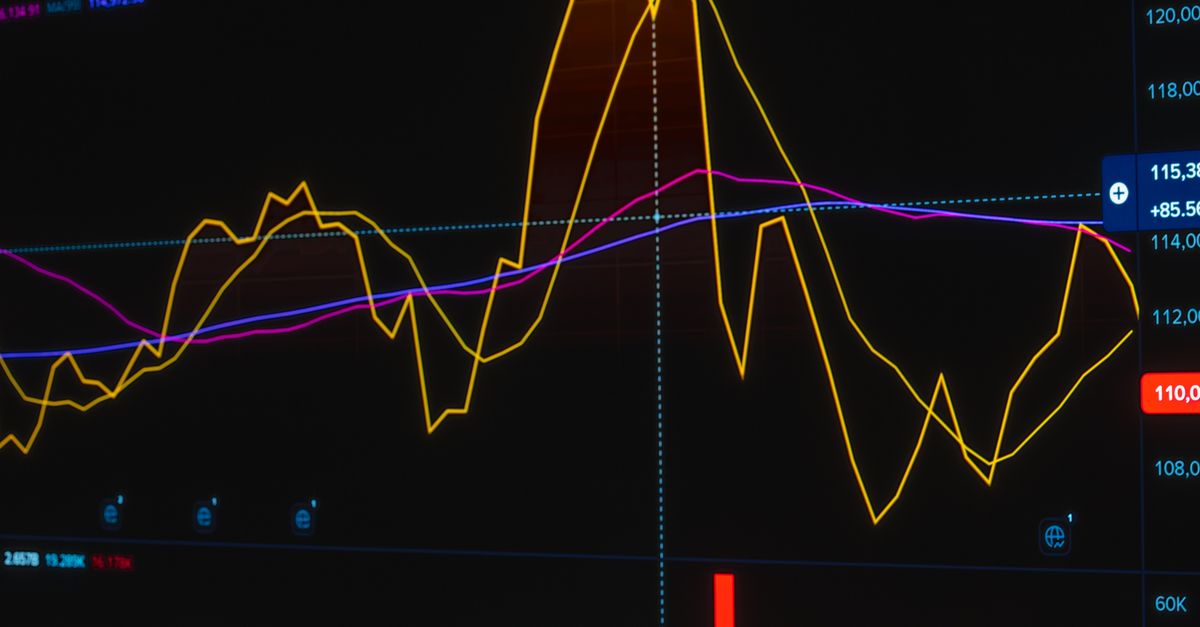
Gold Stocks Support: Decoding the Real Interest Rate Connection
Gold stocks have been in the spotlight after a rough few months of price weakness across the mining sector. Adam Hamilton notes that the battered shares are probing for levels where share demand overtakes supply, hinting at a possible reversal back into rally mode.
Gold traded at $3,896 an ounce on 30 October 2026, down 0.4 % against the London afternoon fix, according to GoldPrice.com’s live prices.
Silver was quoted at $49.26 per ounce, down 1.7 % versus the London afternoon fix.
Platinum and palladium posted modest gains, at $1,437 and $989 per ounce respectively.
Why Real (Inflation-Adjusted) Interest Rates Matter to Miners
A real interest rate is the nominal rate that the Federal Reserve sets for short-term borrowing, minus the prevailing inflation measure. In practice, investors look at the Fed funds rate and subtract the consumer-price index or the personal consumption expenditures index to gauge the cost of money after inflation is taken into account.
For gold-mining companies, the real rate is a key driver of the discount rate that is applied to projected cash flows. A higher real rate raises the discount rate, which reduces the present value of future earnings and puts downward pressure on equity prices. Conversely, a lower real rate lowers the discount rate, making future cash flows more valuable and providing support to stock valuations.
Because miners must front large capital expenditures to develop pits, build processing plants, and secure long-term contracts, their cost of capital is highly sensitive to changes in real rates. The sector therefore tends to react more sharply to real-rate movements than a pure-play gold exchange-traded fund (ETF), which does not carry operating-risk exposure.
How the Current Macro Landscape Intersects with Gold-Mining Valuations
Fed Guidance and Tech Bond Yields
Recent commentary highlights that yields on technology-sector bonds now sit in a range that offers “more competition against stocks than before.” Those yields, spanning from six % to eight %3, create an alternative source of income for investors and can siphon money away from equities, including mining stocks. When bond yields rise, the opportunity cost of holding a stock increases, reinforcing the importance of the real-rate outlook.
Dollar Strength
The U.S. dollar index typically moves inversely to gold-related assets. A stronger dollar makes gold more expensive in foreign currencies, dampening demand for the metal and, by extension, the profitability of miners that sell a large portion of output abroad. Monitoring the dollar’s trajectory can therefore provide early signals about pressure on gold-stock valuations.
Geopolitical Developments
A separate story notes that the United States is weighing a change in sanctions policy toward a Russian sovereign-wealth fund identified as the Russian Direct Investment Fund2. While the exact impact on metal markets remains uncertain, any shift in sanctions could alter global risk sentiment. A relaxation of pressure on Russian financial flows might ease overall market tension, potentially lowering the risk premium that investors demand for mining equities.
A Practical Framework for Valuing Gold-Mining Companies
Investors can build a simple, yet disciplined, valuation model that ties directly to real-rate expectations. The steps are:
- Project Cash Flows: Estimate free cash flow for each year of a mine’s life, incorporating expected production, operating costs, and price assumptions.
- Determine the Discount Rate
* Start with the risk-free Treasury yield, which reflects the baseline return on a safe government bond.
* Add the current real-rate estimate (Fed funds rate minus inflation).
* Add a mining-specific risk premium to account for operational, geopolitical, and commodity-price risk. - Calculate Present Value: Discount each year’s cash flow by the composite discount rate and sum the results.
- Compare to Market Price: If the resulting intrinsic value exceeds the current share price, the stock may be undervalued and positioned near a support zone.
When the real-rate component stabilizes or moves lower, the discount rate falls, and the intrinsic value rises. This shift can create a technical support level on price charts, as investors recognize the improved valuation fundamentals.
What to Watch Next
- Fed Communications: Pay close attention to any forward-looking statements from Federal Reserve officials, especially during press conferences and Q&A sessions. Clues about future policy-rate moves translate directly into real-rate expectations.
- Bond-Yield Movements: Observe the trajectory of yields on technology-sector bonds and broader high-yield credit. A sustained rise could increase the attractiveness of fixed-income alternatives and put additional pressure on mining equities.
- Dollar Index Trends: Track the U.S. dollar index for signs of strengthening or weakening, as this will influence gold demand and miner profitability.
- Sanctions-Related Headlines: Monitor developments regarding the potential easing of sanctions on the Russian Direct Investment Fund. Changes in sanctions policy could shift global risk appetite and affect the risk premium applied to mining stocks.
What We Don’t Know Yet
- Exact Timing of Policy Shifts: The sources do not specify when the Federal Reserve might adjust the policy rate, leaving the timing of any real-rate movement uncertain.
- Depth of Sanctions Changes: It is unclear how extensive any modification to sanctions on the Russian fund would be, and what secondary effects on commodity markets might follow.
- Supply-Side Constraints: The sources do not provide detailed information on supply-side challenges for individual miners, so the extent of any such constraints remains uncertain.
- Investor Sentiment on Tech Bonds: The extent to which the six-% to eight-% yield range will attract large pools of capital away from equities is not quantified, leaving room for divergent interpretations.
Definitions
- Real Interest Rate: The interest rate after accounting for inflation, calculated by subtracting an inflation measure from the nominal rate set by a central bank.
- Discount Rate: The rate used to convert future cash flows into present-value terms; it reflects the cost of capital and risk premium.
- ETF Outflow: A net movement of capital out of an exchange-traded fund, indicating that investors are selling shares of the fund.
- Risk-Free Treasury Yield: The return on a U.S. Treasury security that is considered to have negligible default risk, often used as a baseline for discount-rate calculations.
- Dollar Index: A measure of the U.S. dollar’s value relative to a basket of major foreign currencies; it serves as a gauge of the dollar’s strength.
Bottom Line
By aligning a disciplined cash-flow valuation with real-rate dynamics, tracking Federal Reserve guidance, and watching the interplay of bond yields, dollar strength, and geopolitical headlines, investors can better identify support zones in the gold-mining sector. The combination of macro fundamentals, real-rate sensitivity, and sector-specific factors builds a clearer roadmap for timing entries and exits in gold-related equities.