
From Debt Collapse to Bull: How a Slow Economic Decline Re-asserts Gold’s Safe-Haven Role
Explore how rising debt, weaker real rates, a soft dollar and central-bank buying drive gold price surges in a slow-collapse economy.
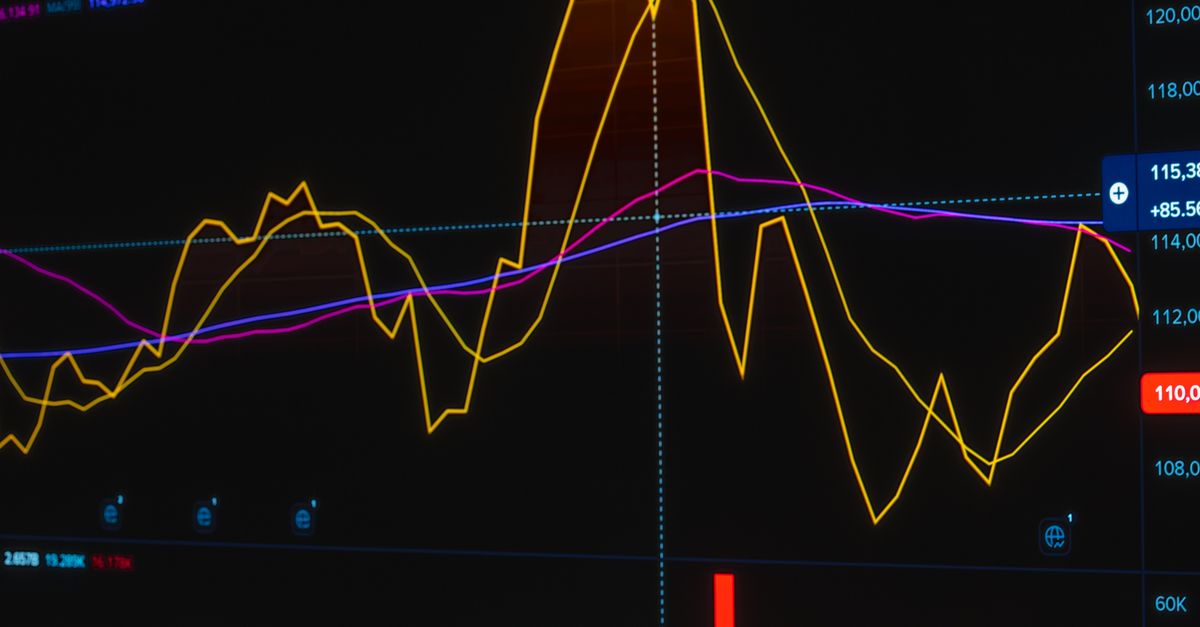
Live metal snapshot (30 October 2026)
- Gold: $3,918 per ounce (down 2.7 % versus the London afternoon fix)
- Silver: $49.66 per ounce (down 0.9 % versus the London afternoon fix)
- Platinum: $1,442 per ounce (down 2.8 % versus the London afternoon fix)
- Palladium: $981 per ounce (down 2.3 % versus the London afternoon fix)
These prices are taken from GoldPrice.com’s real-time feed at 14:58 UTC.
The “slow-collapse” narrative and its origins
ZeroHedge’s recent analysis describes a “slow-collapse” as a gradual erosion of economic foundations rather than a single dramatic shock. The article points to four decades of fiscal promises that outstrip actual productive capacity. Global borrowing has topped $300 trillion, and U.S. federal debt now exceeds $37 trillion. Interest-payment obligations have grown to the point where they outstrip the entire defense budget.
A striking signal of the slowdown is the contraction of the American money supply in 2022 and 2023, the first decline since the Great Depression. The article emphasizes that the system did not explode; it simply began to falter, allowing stress to accumulate unnoticed.
Why the slowdown matters for precious-metal investors
Real-interest-rate dynamics
Real interest rates are the difference between nominal yields on bonds and the inflation rate. When real rates are low or negative, the cost of holding a non-yielding asset such as gold falls, making the metal comparatively more attractive. The recent contraction in the money supply has helped keep real rates subdued, bolstering gold’s safe-haven appeal.
Currency-hedge premium
Gold and silver are priced in U.S. dollars worldwide. A weakening dollar, often a by-product of fiscal strain and lower real rates, enhances the dollar-denominated price of these metals, providing an additional source of upside for investors.
Safe-haven premium
Periods of heightened geopolitical tension or financial stress tend to lift demand for assets that are perceived as stores of value. The “slow-collapse” environment creates persistent, rather than episodic, stress, which can sustain a safe-haven premium over an extended horizon.
Plain-language definitions of key terms
- Sovereign debt: The total amount of money a government owes to creditors. In the U.S., this figure now tops $37 trillion.
- Money supply contraction: A reduction in the total amount of currency and bank deposits circulating in the economy. The United States experienced this for the first time since the 1930s during 2022-2023.
- Real interest rate: The nominal interest rate on a bond or loan after removing the effect of inflation. Low or negative real rates reduce the opportunity cost of holding gold, which does not pay interest.
- Safe-haven asset: An investment that tends to retain or increase its value during periods of market turbulence or economic uncertainty.
The broader economic backdrop: urban pressure points
ZeroHedge also highlighted the fallout in New York City’s private sector. A recent comptroller report showed a loss of roughly 30,000 jobs over two months, bringing total private-sector losses over the past year to about 32,000. September alone accounted for about 23,000 of those cuts, while August added roughly 7,400.
Hospitality and finance were singled out as the hardest-hit industries. Restaurant owners, hotels, and other leisure businesses reported rising operating costs, bureaucratic delays, and persistent inflation, which together intensified financial pressure. The strain on employment and consumer spending in one of the world’s most regulated cities reflects the same macro-stress that underlies the “slow-collapse” narrative.
Implications for gold and silver investors
-
Demand outlook: Persistent fiscal pressure and shrinking money supply create an environment where investors may seek assets that preserve purchasing power. Gold and silver, as traditional stores of value, stand to benefit.
-
Portfolio positioning: Investors looking for a hedge against low real rates and a weakening dollar can consider increasing exposure to physical bullion or exchange-traded products that track metal prices.
-
Diversification considerations: While gold’s macro-real-rate premium dominates, the currency-hedge premium can be amplified during dollar weakness. Silver, with its larger industrial component, may react to both safe-haven flows and industrial demand trends.
-
Risk factors: A sudden rise in real rates or a sharp resurgence of confidence in fiat currencies could diminish the safe-haven premium. Likewise, policy measures that curb fiscal deficits may alter the long-term trajectory of the “slow-collapse” scenario.
What to watch next
- Monetary-policy signals: Any shift in the central bank’s stance on interest rates or quantitative easing could move real-rate expectations.
- Fiscal-budget developments: Updates on U.S. debt servicing costs, especially relative to other budget items, will inform the pressure on government finances.
- Money-supply trends: Continued data on the size of the money base will help gauge whether the recent contraction persists or reverses.
- Employment and sector health: New data on private-sector job losses, particularly in hospitality and finance, will provide a barometer for consumer-spending pressure.
- Regulatory environment: Changes in city-level regulation that affect operating costs for restaurants and hotels could either amplify or relieve the strain on the service sector.
What we don’t know yet
- Timing of a turning point: The “slow-collapse” narrative does not specify when, or if, the gradual stress will translate into a more abrupt correction.
- Policy response magnitude: It remains unclear how aggressively governments will act to curb debt-service burdens or to stimulate the money supply, and what impact such actions will have on real rates.
- International spillovers: While the analysis focuses on the United States and a single U.S. city, the extent to which similar pressures will emerge in other major economies is uncertain.
- Investor sentiment shifts: The degree to which investors will move from traditional safe-haven assets to alternative stores of value, such as cryptocurrencies or foreign currencies, is still an open question.
Bottom line for investors
The convergence of massive sovereign debt, a shrinking money supply, and sector-specific strain in a key economic hub paints a picture of ongoing macro-stress. For precious-metal investors, this environment sustains the three premiums that traditionally support gold and silver prices: a low-real-rate premium, a currency-hedge premium, and a safe-haven premium. Monitoring real-rate movements, fiscal-budget pressures, money-supply data, and employment trends will be essential for assessing the durability of these premiums as 2026 progresses.
Source: ZeroHedge, The Non-Obvious Anatomy Of A Slow Collapse and ZeroHedge, New York City Sheds 30,000 Jobs As Restaurants Face Mounting Financial Pressure.